Good Budget advice for business owners starts with understanding what the announcements mean for your own business and then deciding what to do next.
That approach shaped a successful Budget Unravelled evening at Royal Wootton Bassett Rugby Club on 29 October. Business owners and founders joined Chris Spratling, David Pritchard and Kevin Whelan to explore the implications for their businesses, personal finances and longer-term ambitions.
The discussion moved from employment costs and productivity to funding, pensions and succession, offering practical Budget advice for business owners with a clear purpose: understand what affects your business, explore your options and decide what to do next.
Here are the lessons that owners took back into their businesses.
Calculate the sales needed just to stand still
An increase in costs can create a much larger sales challenge than owners initially expect.
The evening included an illustration of a business facing £40,000 in additional costs. At a 35% gross margin, it would need approximately £114,000 in extra turnover to cover that increase, assuming the additional sales achieve the same margin and require no further overhead.
That is considerable effort before profit improves at all.
The starting point is to calculate the impact on your own business. Payroll, employer contributions, premises and other operating costs need to be considered together. From there, owners can assess the combination of pricing, sales and efficiency improvements required to respond.
Growth targets become more meaningful when they reflect what the business needs to earn.
Look beyond the employees directly affected by wage changes
The audience discussion brought a particular challenge into focus: the impact of wage increases can extend across the team.
When entry-level pay rises, the gap between newer employees and experienced colleagues can narrow. Owners then face difficult decisions about recognition, responsibility and what they can afford.
David discussed looking at the wider reward package, including benefits and pension arrangements, where appropriate. These require individual assessment: salary exchange cannot reduce cash earnings below the applicable minimum wage.
The wider lesson was to plan workforce costs across the business, allowing time to consider both compliance and retention before decisions become urgent.
Make productivity part of the growth plan
Hiring more people is only one way to achieve business growth. The speakers also encouraged owners to examine how effectively their existing teams work.
Where is time lost? Which tasks involve repeated administration? What could better systems, clearer responsibilities or appropriate technology change?
For a business pursuing Scale-Up, these questions matter because additional turnover can otherwise bring additional complexity and cost.
The practical challenge is to identify where investment would improve performance and establish how that improvement will be measured.
Explore funding with a clear purpose
One audience question concerned customers struggling to secure finance. The response from a finance broker in the room highlighted the range of lenders available, alongside the need to consider borrowing costs and lender requirements.
Funding therefore deserves investigation rather than assumptions based on one provider’s response.
David also encouraged earlier conversations about capital investment and potential reliefs. Timing, eligibility and cash flow need to be understood before committing.
For owners, the question is what the money would enable. Investment in equipment, capacity or a potential acquisition needs a clear commercial case, a realistic repayment plan and an understanding of the risks. Access to finance is useful when it supports a sound business decision.
Review business wealth and family wealth together
Kevin’s session brought the discussion back to why many founders build businesses: to provide for themselves and their families.
He highlighted the importance of reviewing pension and inheritance planning together. From 6 April 2027, most unused pension funds and pension death benefits will be included in estates for inheritance tax purposes.
Owners should therefore revisit assumptions about how their wealth will pass to the next generation, with advice suited to their circumstances.
Kevin also urged attendees to locate and document their pensions. Knowing what exists, where it is held and who can find the information is a practical starting point for a better-informed family plan.
Start business exit planning while you still have choices
Chris repeatedly returned to the value of preparing early. A business exit involves decisions about ownership, timing, family priorities and the owner’s financial future. Those decisions need room to develop.
David reinforced the importance of involving accountants and legal advisers before a transaction is imminent.
Employee Ownership Trusts (EOTs) also featured in the evening’s discussion of ownership and exit. For founders weighing their future, the broader task is to assess the available routes, which might include employee ownership, a trade sale, management buyout or family succession. Suitability should follow the owner’s objectives and the business’s circumstances.
Early preparation creates time to explore those choices and address weaknesses that could restrict them.
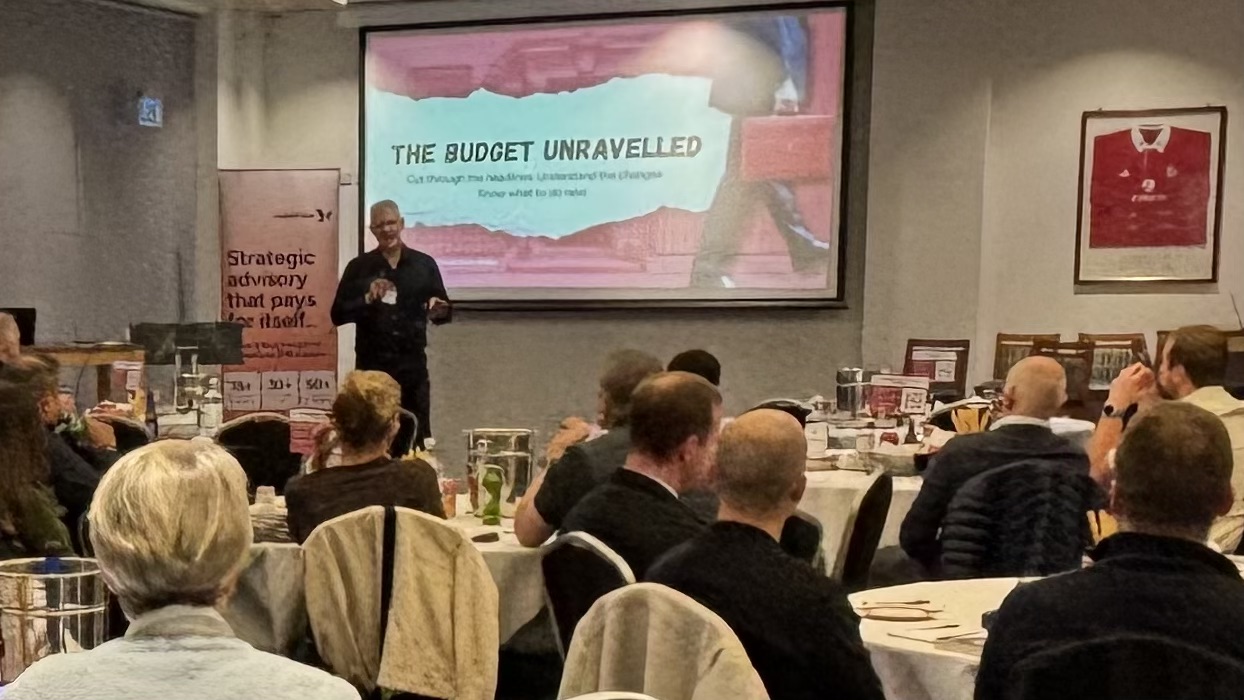
Business owners and founders came together on 29 October to explore the Budget’s implications and plan their next steps.
Budget advice for business owners: your 90-day action plan
Chris closed with a clear challenge: identify the three to five priorities most relevant to your business and decide what to do over the next 30, 60 and 90 days.
That might mean modelling employment costs, reviewing pricing, investigating investment, or arranging a joined-up discussion about succession and personal wealth.
The essential step is to give each priority an owner, a deadline and a clear outcome.
You cannot control what the Chancellor announces. You can decide how well your business prepares and responds.
To discuss your priorities for the next 90 days, contact Chalkhill Blue. We can connect you with Chris, David or Kevin to explore the appropriate next steps.